
Three months ago, neither of these vultures was flying free.
One, a White-backed Vulture, was found on Mara North with an arrow lodged in its body. It was rescued and taken to the Kenya Bird of Prey Trust headquarters in Naivasha for rehabilitation.
The second, a young Rüppell’s Griffon Vulture, was found floundering near Talek, likely having left the nest too early. It was first cared for in our rehabilitation pen before also being taken to Naivasha, where it could spend time among other vultures and, quite literally, learn how to be one.
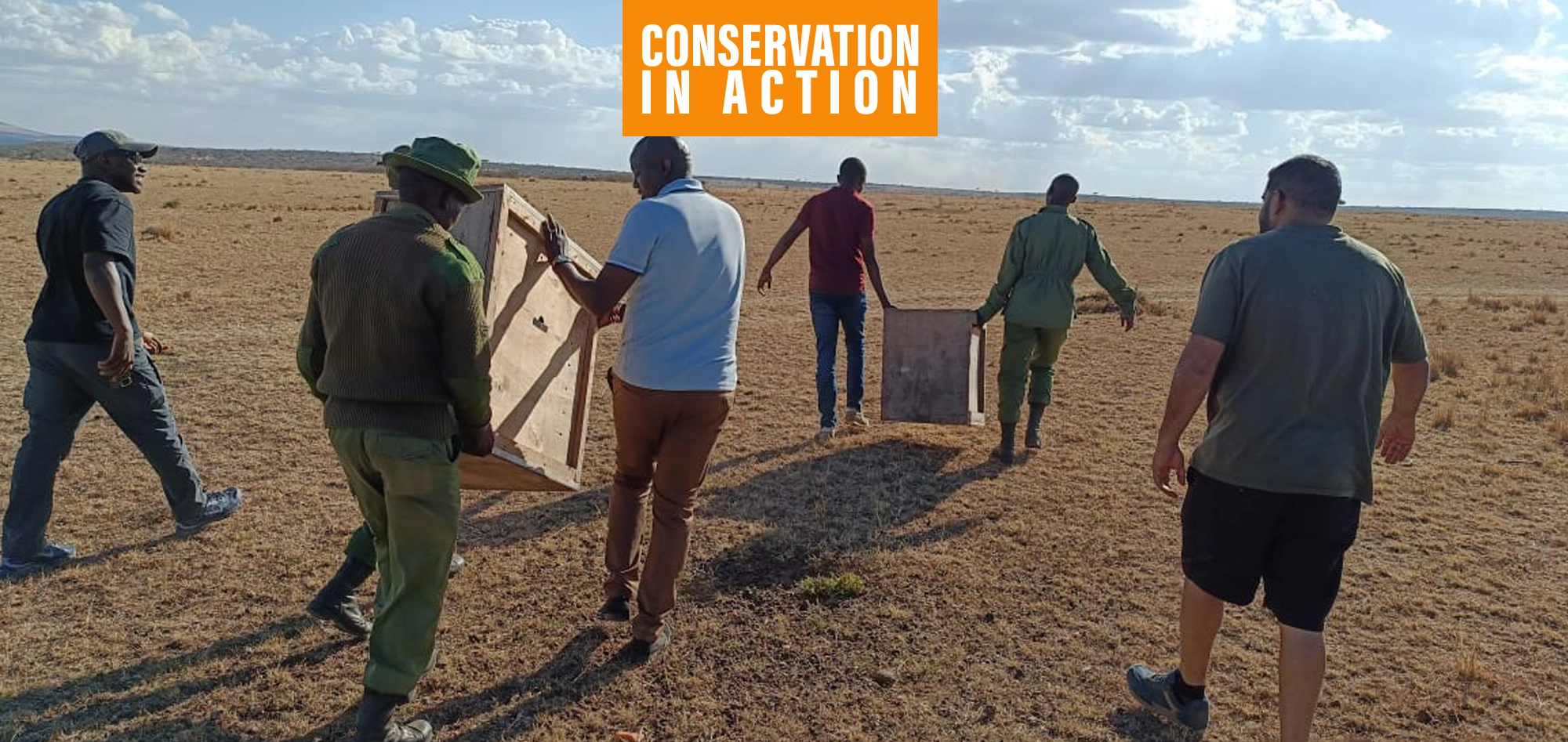
Three months later, both were ready and released back into the wild on Naboisho.
Their story did not end when the crate doors opened.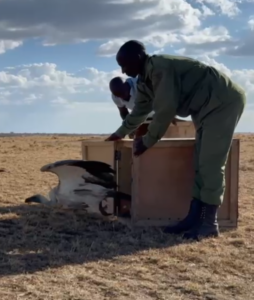 Both birds are fitted with trackers, allowing the conservation team to follow where they go, how they move through the landscape and how successfully they settle back into life in the wild.
Already, the trackers are telling a story.
The White-backed Vulture has remained within the greater Mara landscape, moving between Naboisho and the surrounding conservancies.
The young Rüppell’s Griffon, since its release, has travelled south across the border into Tanzania, reaching the Ngorongoro area.
Two birds. Released from the same place. Within days, two completely different journeys. And that is exactly why the tracking matters.
By following individual birds over time, the team can build a clearer picture of where vultures move, when they move, which parts of the wider Mara ecosystem they depend on, and how those patterns change through the year.
The tracking system can also flag clusters of vultures, helping conservation teams identify where birds may be gathering to feed and respond when needed.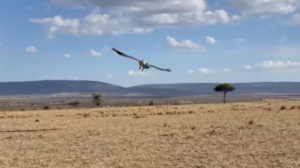
Over the coming weeks, another 15–20 vultures will be fitted with trackers, adding another layer of information to the picture.
This work brings together the Mara Raptor Project, Kenya Bird of Prey Trust, Wageningen University, The Peregrine Fund, Kenya Wildlife Service and the Wildlife Research and Training Institute.
Video and photo credits to: Daniel Lemurt (Naboisho) and Shiv Kapila (Kenya Bird of Prey Trust)